
What Strong Member Relationships Don't Tell Us About Loyalty Performance
New loyalty research examines why satisfied members don't always use their rewards and what could improve engagement and spend.
Stacey Sutherland · 9 November 2026
A healthy membership base and high customer satisfaction can give organizations confidence in their loyalty programs. But those indicators reveal little about how much additional spending, redemption or participation the programs generate. Members can have strong relationships with a brand while finding fewer reasons to engage with its rewards and benefits.
When members use benefits and redeem rewards, programs have more opportunities to influence more frequent purchases, higher spending and interest in other offerings. Those behaviors can also increase customer lifetime value, creating growth opportunities even among customers who already trust the organization and intend to stay.
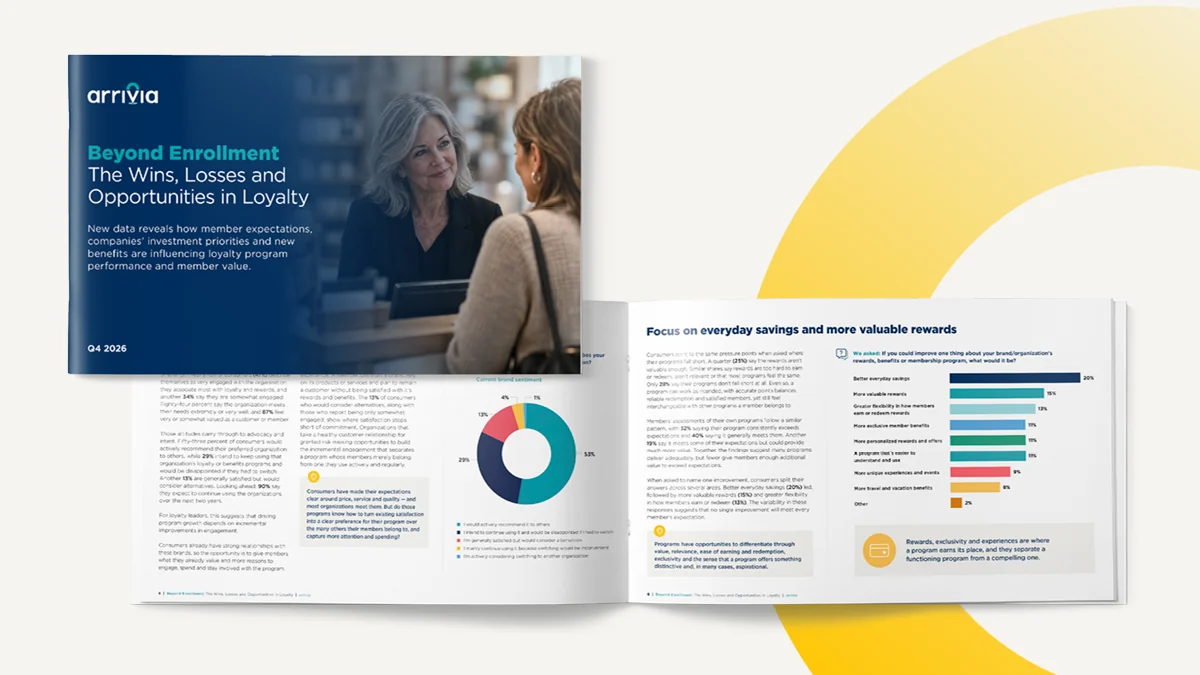
Our new research report, Beyond Enrollment: The Wins, Losses and Opportunities in Loyalty, examines several important 2026 loyalty program trends and where organizations could generate additional value from existing member relationships.
Drawing on responses from 2,007 U.S. consumers and 250 U.S. loyalty and benefits decision-makers, the research spans six sectors: financial services, insurance, health and wellness, retail and membership businesses, affinity groups and military and veteran organizations. It compares what members value and can access with where organizations invest, providing a broader picture of loyalty program performance and opportunities for improvement.
Loyalty program members still expect more from their rewards
When asked about the organization they most associate with loyalty and rewards, most respondents say they feel valued as customers or members and expect to continue that relationship over the next two years.
Yet their assessment of loyalty rewards is less optimistic. A quarter say their rewards aren’t valuable enough. Similar shares cite difficulty earning or redeeming rewards, a lack of relevance or little differentiation between programs as shortcomings.
An organization may retain members without giving them compelling reasons to participate more often, redeem rewards or spend more through the program. Positive customer sentiment can coexist with considerable room to improve the value members receive from their loyalty benefits.
Different rewards offer different reasons to participate
The value members expect from a loyalty program isn't uniform, and neither are the rewards that encourage them to participate. Forty percent say more valuable everyday rewards, such as discounts on regular purchases, would increase their participation. Nearly one-third say bigger, more exciting rewards would do the same, giving members a reason to keep earning.
The report finds that interest in everyday rewards rises with age, while younger consumers respond more to exclusive access and experiences. These differences affect how organizations design their rewards portfolios, especially when a single program must appeal to members with different spending habits, interests and expectations. Partnerships can extend the benefits available beyond an organization's own products and services.
Meanwhile, 86% of the organizations we surveyed expect budgets for loyalty, travel benefits and related engagement technology to increase over the next 12 to 24 months. That investment creates opportunities to improve what members receive, but program leaders need to consider which benefits are likely to encourage greater member engagement and which capabilities will make those benefits accessible and valuable.
Travel’s value extends beyond the reward itself
Travel rewards can serve both immediate and aspirational needs, offering savings on planned trips and access to experiences members can work toward. Sixty-six percent of consumers say a program with travel and vacation benefits would be more valuable than one offering only discounts, points or cash. However, those benefits must suit members’ interests and offer value beyond other booking options.
Members planning a trip have plenty of booking options beyond their loyalty programs. Offering attractive ways to book through an existing membership or rewards relationship creates an opportunity to capture more of that activity, especially when travel options, prices and redemption value compare favorably with other booking channels.
Consumers also say high-value travel benefits could influence whether they renew, spend more or explore additional products and services with a brand or organization. Yet access remains uneven. Across eight travel categories tested in our consumer survey, between 35% and 45% say their programs don't offer them. The breadth of travel available through a program therefore matters in whether members can use their benefits for the trips and experiences they value.
Cruise demand illustrates the opportunity in underused rewards
Sixty percent of consumers say exclusive cruise-related benefits would make them more loyal to the organization offering them, yet 45% say their programs don’t offer them.
Organizations also recognize the potential, with 88% of decision-makers surveyed interested in adding or expanding cruise benefits over the next two years. Their ability to act on that interest depends partly on their partners; for organizations without these benefits, a lack of cruise options in their current supplier portfolio is the most common barrier.
Organizations also want cruise to fit within their existing offering. For example, financial decision-makers place particular importance on bundling cruise with other travel benefits. A partner with cruise inventory, booking technology, fulfillment and travel-servicing capabilities can help programs deliver these benefits without requiring them to develop and manage the underlying travel operation.
The findings point to different opportunities across sectors, membership types and reward categories. Travel and cruise offer ways to expand membership value, but the commercial contribution of any benefit depends on whether members can access it, choose to use it and keep engaging with the program.
Explore what members value, where loyalty programs could deliver more and how rewards investment can contribute to stronger participation and commercial performance.
Download our latest research, Beyond Enrollment: The Wins, Losses and Opportunities in Loyalty.
Frequently asked questions
Why isn’t enrollment enough to measure loyalty program success?
Enrollment shows how many people have joined a program, but it doesn’t reveal whether they use its benefits or change their purchasing behavior. Tracking participation, reward redemption, purchase frequency and spending provides a clearer picture of the value a program generates.
Why do satisfied members sometimes underuse their loyalty benefits?
Members can value their relationship with an organization while finding its rewards less compelling. The research identifies several barriers, including insufficient reward value, difficulty earning or redeeming rewards, limited relevance and little differentiation between programs.
What rewards encourage members to participate more often?
Service layers, API gateways, and message queues
Forty percent of consumers say more valuable everyday rewards, such as discounts on regular purchases, would increase their participation. Nearly one-third say bigger, more exciting rewards would do the same. Offering both can help programs meet immediate needs while giving members something to work toward.
How do reward preferences differ across age groups?
The research finds that interest in everyday rewards increases with age, while younger consumers respond more to exclusive access and experiences. A mix of benefits can help programs appeal to members with different priorities and spending habits.
How can travel benefits strengthen a loyalty program?
Travel benefits can combine practical savings with experiences members aspire to enjoy. In the survey, 66% of consumers say a program with travel and vacation benefits would be more valuable than one offering only discounts, points or cash. Relevance, competitive pricing and ease of use help determine whether members choose to book through the program.
What makes cruise benefits an opportunity for loyalty programs?
Sixty percent of consumers say exclusive cruise-related benefits would make them more loyal to the organization offering them, yet 45% say their programs don’t offer these benefits. This gap suggests an opportunity to expand member value with a reward category many programs currently lack.
How can organizations add travel and cruise benefits?
Organizations can work with partners that provide travel inventory, booking technology, fulfillment and traveler support. These capabilities can help them expand their benefits without building and managing the underlying travel operation themselves.
What should organizations prioritize when investing in loyalty programs?
Investment should address what prevents members from participating: reward value, relevance, access and ease of redemption. Organizations should then assess whether improvements lead to greater benefit use, more frequent purchases, higher spending and stronger ongoing engagement.